
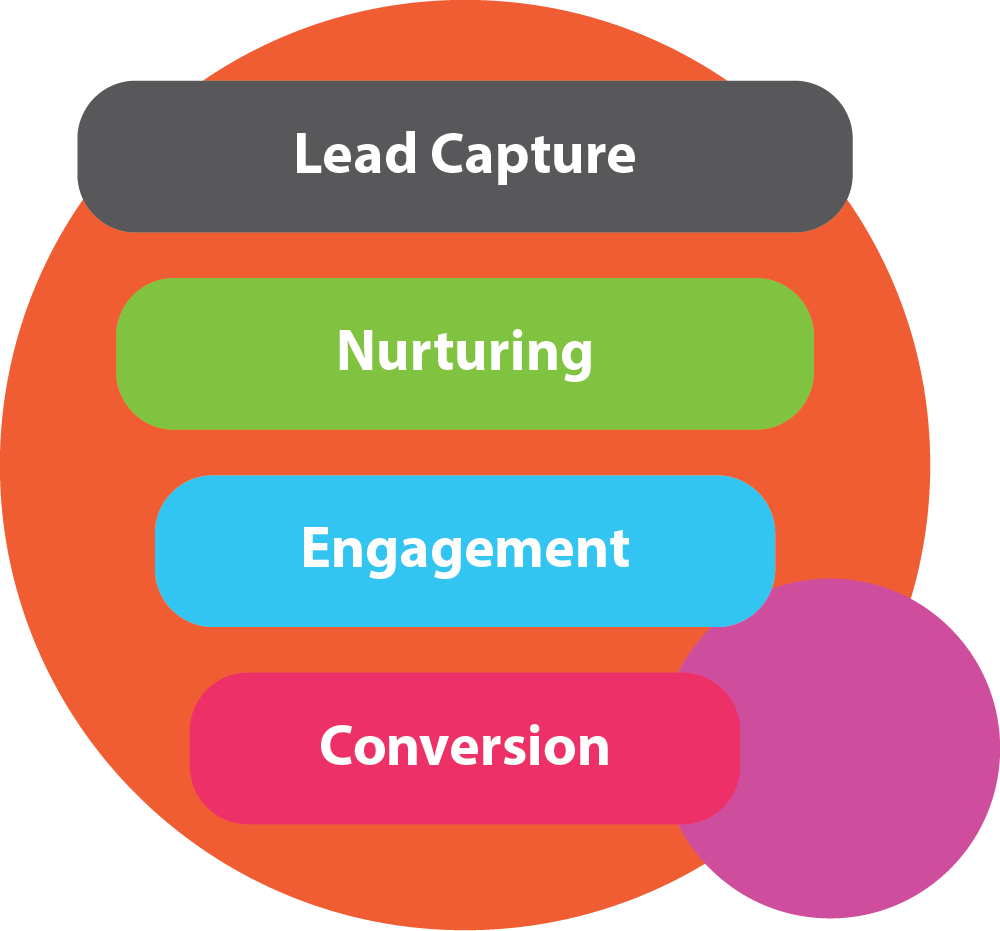
Lead Generation for UK Businesses
Lead generation, or ‘lead gen’ as it is often called, is one of the most searched topics in B2B marketing and one of the most misunderstood. Most businesses know they need more leads. Fewer understand why their current approach isn’t delivering for them, or what to actually do about it.
Read on to discover the fundamentals of lead generation, why getting the strategy right matters more than the tactics you choose, and what happens when businesses try to fix a lead generation problem without first understanding what is causing it.
What is lead generation?
Lead generation is the process of attracting potential customers to your business and capturing enough interest to begin a sales conversation. In B2B marketing, that typically means generating enquiries, form completions, calls, or content downloads from businesses that fit your target customer profile.
Effective lead generation is not just about volume. A pipeline full of poor-fit enquiries is often worse than a smaller pipeline of well-qualified prospects. It wastes sales resources, distorts conversion data, and creates a false sense of activity without commercial progress.
The fundamentals of B2B lead generation
Who is your ideal customer?
The more precisely you can define who you are trying to reach by sector, company size, role, or challenge the more efficiently your marketing can work. Broad targeting tends to produce broad, low-quality results.
What problem do you solve?
Your positioning needs to speak directly to the challenges your ideal customer is experiencing. Generic messaging produces generic responses. Clear, specific value propositions attract the right people.
What does a good lead look like?
Sales and marketing teams often disagree on this, which causes friction and wasted effort. Defining a shared understanding of what qualifies as a marketing-qualified lead (MQL) and a sales-qualified lead (SQL) is one of the most valuable and most overlooked steps in building a lead generation system.
What does your customer journey look like?
From first awareness to first conversation, every step needs to be smooth. Too much friction, a complex form, a confusing website, a weak call to action, and you lose prospects who were genuinely interested.
Why strategy matters more than tactics
There is no shortage of lead generation tactics: paid search, content marketing, SEO, email, social, events, partnerships, referrals. Each has its place. But tactics without strategy tend to produce inconsistent results, because they are being used without a clear framework for what success looks like or why one approach makes more sense than another for a specific business.
A strategic approach to lead generation starts with understanding your commercial objectives and working backwards. How many new clients do you need this year? What is your average deal size and sales cycle? What conversion rate can you realistically achieve at each stage of your funnel? Once you have those numbers, you can determine what volume of leads you actually need and then decide which channels are most likely to deliver them cost-effectively.
Without that foundation, businesses tend to chase tactics reactively. Something works for a competitor, so they try it. A salesperson learns about a new channel and asks marketing to test it. Budget is spread too thinly across too many activities, none of which receive the focus or time needed to perform. Strategy provides the filter that helps you invest in the right things and stop doing the wrong ones.
The hidden cost of fixing the wrong problem
One of the most common and expensive lead generation mistakes is treating a strategic problem as a tactical one.
In 2024, one business we worked with saw its inbound enquiries fall from around 70 leads per month to just 24. The leadership team responded by appointing a paid digital agency and a lead generation agency. Leads began to rise again, but the business was now spending between £5,000 and £10,000 per month, and the cost per lead had risen from effectively zero organic to almost £250.
The picture was worse still. The new leads were a poorer fit for the business. Sales conversion rates dropped from 5% to 3%. The business was paying more to win fewer clients.
The real problem was not the quantity of leads. It was that, over time, the website had lost its focus. Content had become unfocused, the core message had drifted, the customer journey had become cluttered, and the main call to action required prospects to complete a form with more than 15 questions. The paid activity did not fix any of this; it simply drove more traffic to a marketing system that was not working.
Our approach was different. We paused paid spend, assembled a small fractional marketing team, clarified the positioning, simplified the customer journey, optimised the content, and introduced marketing automation to nurture prospects effectively. Leads were lower in the short term while the underlying issues were addressed. But from August, performance began to recover, and by the following February, inbound leads reached an all-time high of over 100 per month at a cost per lead of £72, with marketing-to-sales conversion rates as high as 16%.
The lesson is straightforward: paid activity can amplify a working marketing system, but it cannot fix a broken one. Strategy has to come first.
Building a lead generation system that scales
Sustainable lead generation is not a campaign. It is a system. The most effective B2B businesses build a repeatable engine for generating leads consistently, rather than relying on bursts of paid activity or individual initiatives.
That system typically includes a clearly positioned website that converts well, a content strategy that attracts the right audience at the right stage of their buying journey, a defined process for nurturing leads that are not yet ready to buy, and clear alignment between marketing activity and the revenue targets the business is working towards.
Building that system takes time and requires senior marketing capability to make the right decisions along the way. For many growing businesses, that is where fractional marketing support makes the most sense, providing the strategic leadership to design and build the system without the cost or commitment of a full-time hire.
Common lead generation mistakes to avoid
Prioritising volume over quality
More leads may sound like progress, but it’s only progress if those leads have a realistic chance of becoming customers. Businesses that optimise purely for volume often end up flooding their sales team with enquiries that do not align with their customer profile, driving up the cost per acquisition and pushing down conversion rates.
A smaller pipeline of well-qualified prospects will nearly always outperform a larger one of poor-fit enquiries, both commercially and in terms of the time and resource required to work through it.
Jumping straight to tactics
It’s tempting to jump straight into activity. A new campaign, a different channel, a fresh piece of content. But without a clear strategic foundation, individual tactics tend to underdeliver because they are not connected to a coherent view of who you are trying to reach, what you are trying to say, or what commercial outcome you are working towards.
Tactics compound when they are part of a system. In isolation, they tend to produce short-term noise rather than sustained pipeline growth.
Measuring the wrong things.
Marketing teams are often judged on metrics that feel meaningful but do not directly connect to revenue. Impressions, clicks, follower counts, and open rates all have their place, but they are not the same as pipeline. If your reporting does not include cost per qualified lead, lead-to-opportunity conversion rate, and marketing’s contribution to closed revenue, you are likely optimising for the wrong outcomes.
What gets measured gets managed, and measuring the wrong things leads to decisions that look good on a dashboard but do not move the business forward.
Ignoring the website
Your website is where almost every lead generation channel eventually lands. Paid ads, organic search, social media, email, referrals: they all point back to your site at some stage of the journey. If the website is slow, unclear, hard to navigate, or asks too much of visitors before offering them any value, you will lose a significant proportion of the interest you have worked hard and often spent money to generate.
Investing in channels without investing in the destination they lead to is one of the most common and costly oversights in B2B marketing.
No lead nurturing
The majority of B2B buyers are not ready to purchase the first time they engage with your business. They may be early in their research, not yet have budget confirmed, or simply need more time to build confidence in your approach. Without a nurture process in place, those leads go cold and are rarely recovered.
A straightforward nurture sequence, whether through email, retargeting, or a combination of both, keeps your business visible and relevant until the prospect is ready to have a conversation, significantly improving the return on your lead generation investment over time.
Sales and marketing misalignment
When sales and marketing operate with different definitions of what a good lead looks like, the consequences ripple through the entire pipeline. Marketing generates leads that sales dismisses as unqualified. Sales chases prospects that marketing considers too early. Each team blames the other for poor results.
Resolving this starts with a simple but often neglected conversation: agreeing on a shared definition of a qualified lead, what information is needed before a lead is passed to sales, and what happens to leads that are not yet ready. That alignment, once established, tends to improve both lead quality and conversion rates almost immediately.
How SGC Marketing approaches lead generation
We work with growing UK businesses to build lead-generation systems grounded in commercial strategy, not just marketing activity. Whether you need a Fractional CMO to lead the thinking, an outsourced marketing team to deliver the execution, or both, we start by understanding what is actually driving or limiting your inbound pipeline before recommending any course of action.
If your lead generation has plateaued, or you are spending money on an activity that is not converting, get in touch and let’s talk through what might be causing it.
Frequently Asked Questions about Lead Generation
What is the difference between a lead and a qualified lead?
A lead is any expression of interest in your business: a form completion, a call, a content download. A qualified lead is one that meets specific criteria suggesting they are a realistic potential customer, such as the right company size, sector, budget, or decision-making authority. The goal of a lead generation system is not just to produce leads, but to produce qualified ones.
How long does it take to see results from lead generation?
It depends on the approach. Paid advertising can generate leads quickly but stops the moment you stop spending. Organic approaches such as SEO, content, and referral take longer to build but tend to deliver more sustainable and cost-effective results over time. Most businesses benefit from a mix of both, managed within a clear strategy.
How much should we spend on lead generation?
There is no universal answer, but a useful starting point is to work backwards from your revenue targets. If you know your average deal value, your close rate, and how many leads you need to generate one new client, you can calculate the volume of leads required and assess what a reasonable cost per lead looks like for your business.
Do we need a dedicated lead generator or marketing team?
Not necessarily a full in-house team, but you do need senior marketing capability to make the right strategic decisions, and reliable execution resource to deliver consistently. Many growing businesses achieve this through a combination of fractional marketing leadership and either a small internal team or an external agency for delivery.
Useful Lead Generation links
Lead generation explained, Wikipedia
An overview from the knowledge-based site on what lead generation is.
Lead generation strategies, HubSpot
A downloadable guide from the team at HubSpot, covering a range of strategies.
15 proven B2B lead generation ideas, ZenDesk
Some inspiration from the ZenDesk team.